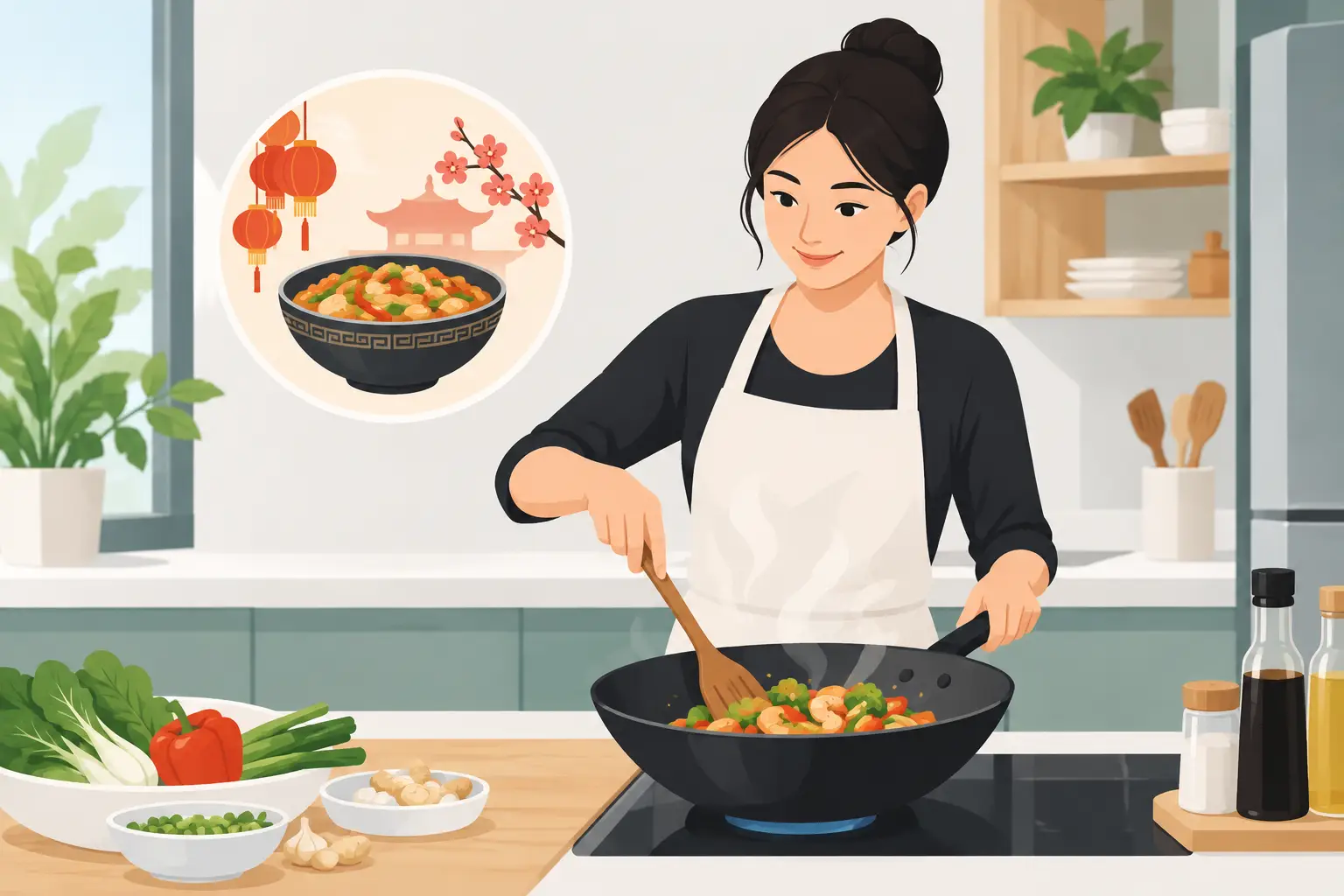
A household can say it needs an Indonesian maid for cooking, but that description is rarely enough to identify the right person. One family may need daily Chinese home-style dinners for grandparents, while another needs halal Indonesian meals, baby porridge, low-sodium dishes, or efficient batch cooking for two working adults. The better your brief, the easier it is to compare biodatas and have focused conversations with licensed agencies.
Start with the cooking your household actually eats
Cooking ability is not one skill. It is a combination of familiarity with ingredients, confidence in specific methods, ability to follow recipes, food-safety habits, portion planning, and willingness to learn your family's preferences.
Before searching, write down what a normal week looks like. Include the cuisines your family eats most often, how many people are at home for meals, whether lunch needs to be packed, and whether dinner is expected every day. Mention practical constraints too: halal requirements, vegetarian meals, allergies, diabetic or low-salt diets, pork handling, separate utensils, and whether the helper will shop independently or cook from a planned grocery list.
For many Singapore households, the key question is not simply whether a candidate can cook Chinese food. Ask which dishes she has prepared repeatedly in a previous home. A helper who has cooked steamed fish, soups, stir-fries, congee, braised dishes and simple vegetable dishes for years may be a stronger fit than someone who only lists “Chinese cooking” on a biodata. Equally, a candidate with less direct experience may be suitable if your household has simple meal needs and you are prepared to provide recipes and a learning period.
Be realistic about the rest of the job. Cooking for a multigenerational family can involve menu planning, wet-market shopping, kitchen cleaning, elderly dietary needs and several meal times. If the same person is also responsible for infant care, intensive elderly care, pets, or a large home, the daily workload needs to be discussed honestly. A good cook cannot produce consistent meals if the schedule gives her no workable time to prepare them.
What to look for in an Indonesian maid for cooking
Nationality alone does not predict cooking fit. Indonesian helpers come with different work histories, language abilities, regional food familiarity and levels of exposure to Singapore kitchens. Prior experience in Singapore can be useful because it may indicate familiarity with local ingredients, hawker-market shopping, Chinese household routines and common appliances. But it should be treated as a starting point, not a guarantee.
Look closely at the detail behind the profile. Relevant signals include the size and composition of the previous household, length of employment, cuisines cooked, whether the candidate managed groceries, and whether cooking was a main duty or an occasional one. A helper who supported two adults may have very different experience from one who cooked daily for four children and elderly parents.
Video introductions can add useful context. Listen for how specifically a candidate describes her cooking. Does she name dishes and explain what she normally prepares? Can she describe how she would adapt meals for children or an elderly person? Is she comfortable following a written recipe, a video, or instructions from an employer? Clear answers are more useful than broad claims of being “good at cooking.”
Language matters because cooking instructions are often detailed. If you use English, Mandarin, Malay, or a mix at home, confirm how recipes, shopping lists and dietary instructions will be communicated. A candidate does not need to speak every household language fluently, but there should be a practical way to avoid mistakes around food and medication-related diets.
Interview for evidence, not promises
An interview is where a cooking requirement becomes measurable. Instead of asking, “Can you cook?”, use questions that reveal routine, judgement and willingness to learn.
Ask what she cooked in her most recent household across a typical week, who decided the menu, and how she handled leftovers. Ask which Chinese dishes she has made independently, what she would prepare for a child who is unwell, and how she would reduce salt or oil when requested. If your family follows halal practices, be direct about the ingredients, storage and kitchen routines involved.
You can also present a realistic scenario. For example: “There are five people at dinner, including one elderly parent who needs softer food. We want soup, one fish dish, one vegetable dish and rice by 6.30pm. How would you plan the preparation?” The purpose is not to catch a candidate out. It is to understand her current capability and how she thinks through timing.
If possible, ask the agency whether the candidate can share photos of dishes she has cooked, provide a former employer reference where appropriate, or join a video call to discuss a sample menu. Photos are not proof of independent cooking, and references may be limited by availability, but both can add context. Confirm all information directly with the agency handling the placement.
Avoid treating a cooking test as the only deciding factor. A person can reproduce one recipe under pressure and still struggle with daily planning. Conversely, a capable helper may be nervous in a remote interview. Consider the full picture: demonstrated experience, communication, attitude toward feedback, work scope and the support your household can provide in the first few weeks.
Compare candidates against your full household needs
The best cooking match may not be the best overall hire if essential care requirements are overlooked. A family with a toddler may prioritise infant-care experience and view cooking as a skill to develop. A household caring for an elderly parent may need someone who can prepare suitable meals but also understands safe transfers, companionship or medication reminders within the agreed role.
This is why a structured comparison is more useful than opening profiles one by one. Search using the skills that matter together: Indonesian nationality, Chinese cooking experience, prior Singapore employment, language ability, transfer availability, elderly care, infant care or pet care where relevant. Then inspect each profile's work history rather than relying on a single label.
SmartMaid can help employers turn a plain-language request into ranked biodatas across participating licensed agencies. Treat match percentages as an indicative shortlist tool, not a hiring decision. Tap into the score breakdown to see why a profile was recommended, then verify availability, salary expectations, agency fees, deployment timing and stated experience with the agency.
A transfer helper may suit a household that needs support sooner, but availability can change quickly and the reasons for transfer should be discussed carefully. An overseas candidate may offer stronger long-term experience for your needs, but deployment takes time. Neither route is automatically better. The right choice depends on urgency, the candidate's verified background and the time your household can commit to onboarding.
Set expectations before the helper starts
Cooking succeeds when expectations are clear from the first week. Prepare a simple household food guide with preferred dishes, dietary restrictions, common brands, appliance instructions, food-storage rules and a few sample menus. If your family has strong preferences about sweetness, spice, salt, oil, soup ingredients or meal timing, explain them early rather than assuming they are understood.
Give feedback promptly and specifically. “The soup was too salty for Grandpa” is more useful than “Please cook better.” For a new dish, cook together once, share a recipe, or show a short video. Build a gradual progression: start with familiar daily meals, then introduce family favourites, special diets and entertaining dishes once the routine is stable.
Discuss shopping responsibilities as well. Clarify the budget, where ingredients should be bought, whether substitutions are acceptable, how receipts are handled and when the household should be consulted. These operational details often affect meal quality more than a profile's cooking label.
Make the search brief specific enough to act on
When sending an enquiry to agencies, state the non-negotiables first. For example, you may need an Indonesian helper with daily Chinese home-cooking experience for a five-person household, confidence preparing low-salt meals for an elderly parent, conversational English, and a willingness to follow family recipes. Add the expected start date and any other core duties.
That level of detail helps agencies propose candidates who are genuinely relevant instead of sending a broad selection of available biodatas. It also gives you a fair basis for comparing responses and asking consistent interview questions.
A capable cook is valuable, but the lasting fit comes from a clear household routine, verified experience and a candidate who can learn how your family likes to eat. Start with the meals that matter most, then use each agency conversation to test whether the profile matches the real work behind them.